
Can You Stay in Your Layton Home During Professional Water Restoration?
Updated On: May 12, 2026
Author: Darin Jenks
A pipe bursts. Water soaks through the floor. You call for help, and now there's a crew with industrial fans and dehumidifiers setting up in your living room. The obvious question hits: do I actually have to leave? If you're a Layton homeowner in the middle of professional water damage restoration, you're probably wondering exactly that. The good news is that you don't always have to pack a bag. The answer depends on what kind of damage you're dealing with and how much of your home is affected.
At Swift Restoration and Remodeling, we've worked with homeowners across Davis County for over 15 years. We get asked this question all the time. Here's an honest take.
The Short Answer: It Depends on the Water Type
Not every water damage situation requires you to leave. Smaller, contained incidents caught early often allow homeowners to stay put while restoration equipment runs. Larger events involving sewage, significant structural saturation, or potential mold usually make leaving the safer call.
Restoration professionals classify water damage into three categories, and the category matters a lot:
| Water Category | What It Means | Leave Home? |
|---|---|---|
| Category 1 | Clean water from a supply line, faucet, or rain | Often not necessary |
| Category 2 | Grey water with some contamination | Depends on scope |
| Category 3 | Black water: sewage, floodwater, heavily contaminated | Yes, strongly recommended |
Category 3 water carries serious health risks. According to CDC guidance on flooded homes, contaminated water can carry bacteria and pathogens that pose real hazards, especially for children, elderly residents, or anyone with a compromised immune system.
Not sure what you're dealing with?
Our team can assess your situation and tell you whether it's safe to stay. We're available 24/7.
Get a Free AssessmentWhen You Really Should Leave Your Layton Home
There are clear situations where leaving isn't just recommended, it's genuinely important for your family's health and safety.
Sewage or Contaminated Water Is Involved
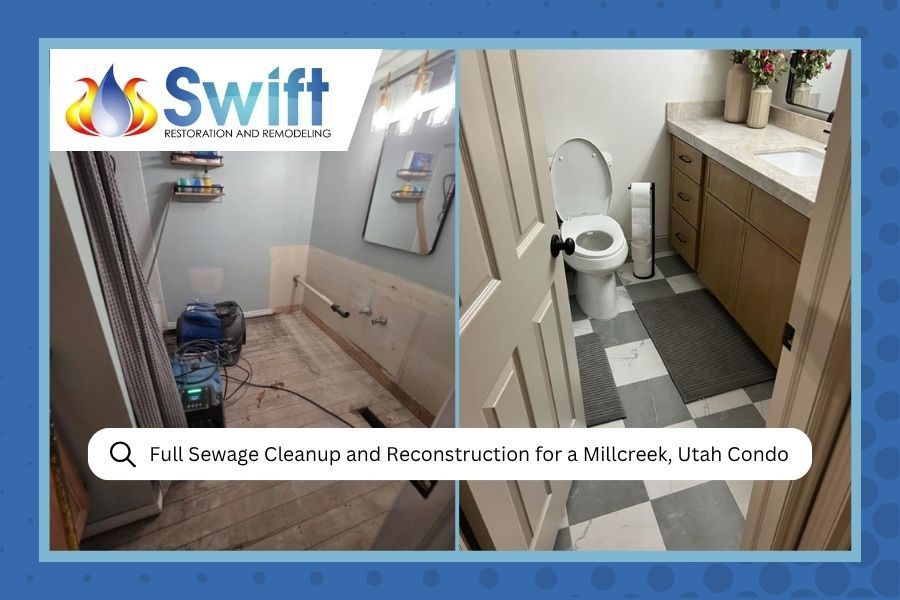
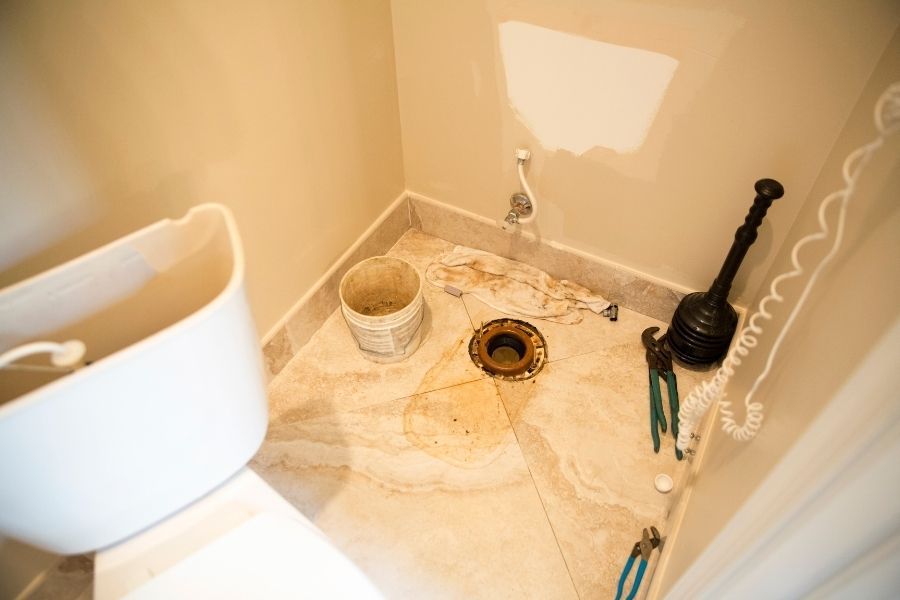
Sewage backups and Category 3 flood events are a different problem entirely. The contaminants can cause illness, and the cleanup process itself, including removal of soaked materials and antimicrobial treatments, creates conditions you don't want to be living around. Our sewage cleanup services involve containment and protective equipment for good reason.
Large Areas of the Home Are Affected
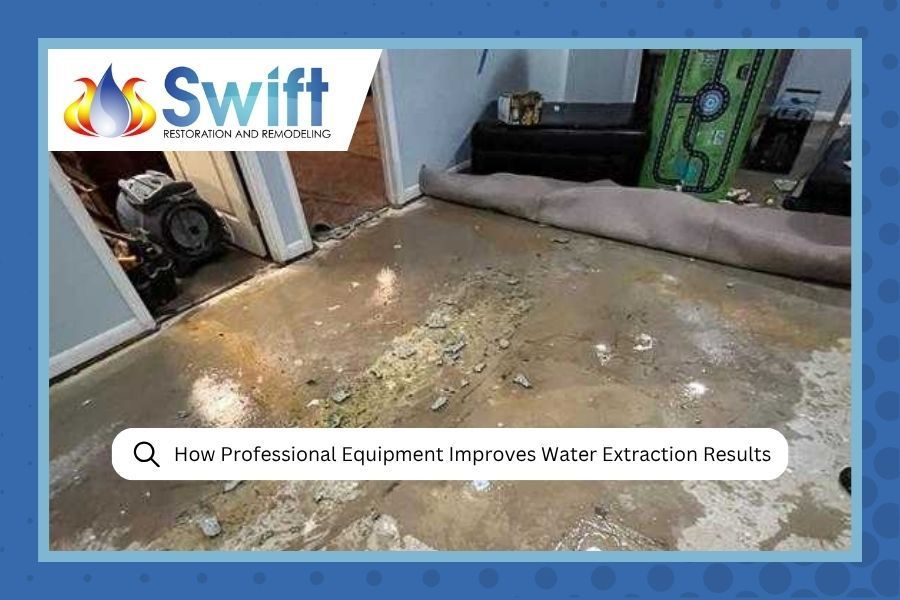
If water has saturated multiple rooms or spread through your main living areas, the restoration process gets disruptive fast. Industrial drying equipment is loud. It runs 24 hours a day. Humidity levels fluctuate noticeably. That's manageable in one room for a couple of days. It's a lot less manageable when it's your whole first floor for a week.
Electrical or Structural Systems Are Compromised
Water and electrical systems don't mix. If there's any question about whether water reached your panel, outlets, or wiring, staying in the home while that's being evaluated is not a risk worth taking. Full stop.
When Staying Might Be Perfectly Fine
Plenty of Layton homeowners stay throughout the restoration process without any issues. Here's when that's typically a reasonable option.
The Damage Is Isolated to One Area
A flooded laundry room or a bathroom with a slow leak affecting one section of flooring can often be dried with minimal disruption to the rest of the home. If the affected space can be closed off and your main living areas stay functional, staying is usually fine.
The Water Source Was Clean
Category 1 incidents carry much lower health risk. The primary concern is structural drying, and that process can happen around you. Your restoration crew will set up containment, protect unaffected areas, and keep the work as contained as possible. The noise is really the main thing to prepare for.
What Professional Water Restoration Actually Looks Like
A lot of homeowners picture restoration as a quick clean-and-dry operation. It's more involved than that. Understanding the difference between water mitigation and full restoration helps set expectations. Mitigation stops the damage from spreading. Restoration brings your home back to pre-loss condition. The full process can run three days to several weeks, depending on scope.
Typical Water Restoration Timeline
- Day 1: Emergency water extraction, moisture mapping, equipment placement
- Days 1-2: Removal of saturated materials (drywall, flooring, insulation) as needed
- Days 2-5: Active structural drying with air movers and commercial dehumidifiers
- Days 3-5: Daily moisture monitoring to confirm drying progress
- Day 5+: Equipment removed once readings reach target thresholds
- Rebuild phase: Reconstruction of removed materials begins
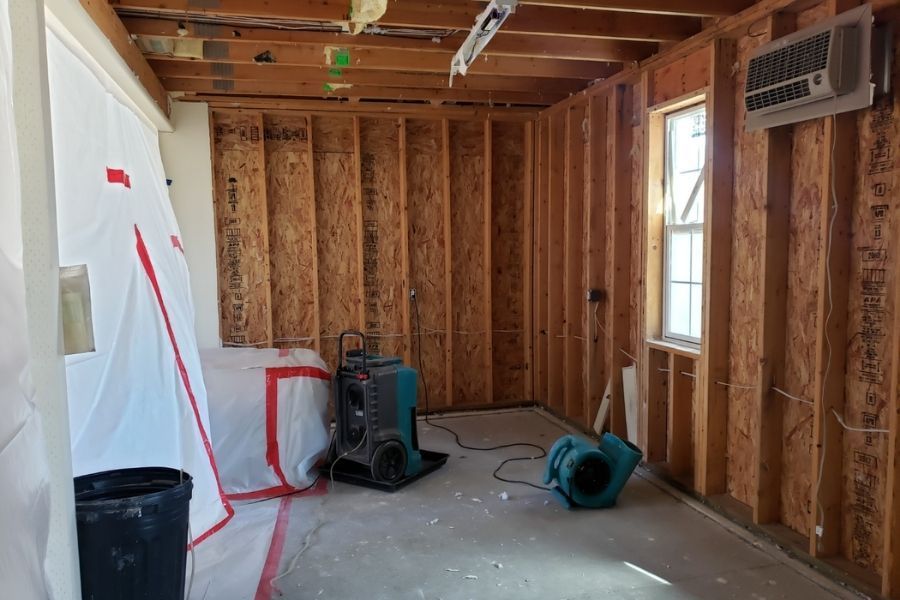
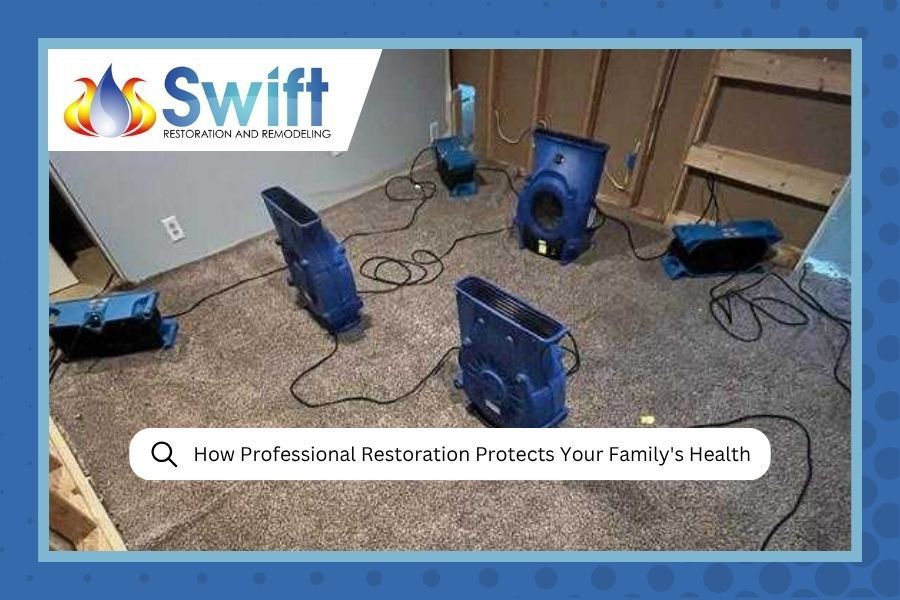
The drying equipment runs continuously. Most commercial air movers operate at around 70-75 decibels, similar to a vacuum cleaner running in the next room, except for days on end. That's the main comfort consideration if you're on the fence about staying.
Tips for Staying Comfortable During Restoration
If you've decided staying makes sense, a few practical things make the process more bearable.
- Ask your restoration team to walk you through the equipment setup so you know what each machine does and when it'll likely come out.
- Sleep as far from equipment as possible. Closed doors help with noise, and a white noise app fills in the rest.
- Keep the drying zone off-limits. Foot traffic disrupts airflow and actually slows drying.
- Check your policy for Additional Living Expenses coverage. You may be entitled to hotel costs even for a partial displacement.
- Keep pets away from restoration zones. Equipment is a hazard for curious animals, and the noise causes real stress for many of them.
For help navigating the insurance side of things, the post on what to do first after discovering water damage in Northern Utah covers documentation steps that save a lot of headaches later.
At Swift Restoration and Remodeling, our IICRC-certified technicians serve Layton and the surrounding Davis County area. Whether you stay or relocate temporarily, we keep you informed throughout the process and get your home back to normal as efficiently as possible. Visit our Layton water damage restoration page to learn more about how we serve your area.
Frequently Asked Questions
How long does water damage restoration take in a typical Layton home?
The drying phase typically takes three to five days for smaller incidents and up to seven to ten days for more extensive damage. Reconstruction starts after drying is complete and adds time depending on what materials need replacing. Your team should give you a realistic estimate after the initial moisture assessment.
Will homeowner's insurance cover a hotel stay during water restoration?
Many homeowner's policies include Additional Living Expenses (ALE) coverage, which can cover hotel stays and related costs when your home is uninhabitable due to a covered loss. Coverage limits vary, so contact your insurance adjuster early in the process to understand exactly what your policy covers.
Is the noise from restoration equipment really that disruptive?
It's loud and it runs around the clock. Commercial air movers and dehumidifiers can't be shut off overnight because continuous drying is essential to the process. Most homeowners handle shorter jobs fine, but for longer projects, many opt to stay elsewhere. It really comes down to your tolerance and how long restoration is expected to take.
Can mold still grow while restoration equipment is running?
Active drying equipment removes the moisture mold needs to grow, so the process works against mold development. That said, if water sat for more than 24 to 48 hours before equipment was set up, mold may already be present. In those cases, a professional mold assessment alongside the drying phase is a smart move.