Professional Leak Detection Methods Used in Northern Utah Homes
Updated On: April 14, 2026
Author: Darin Jenks
Jump To:
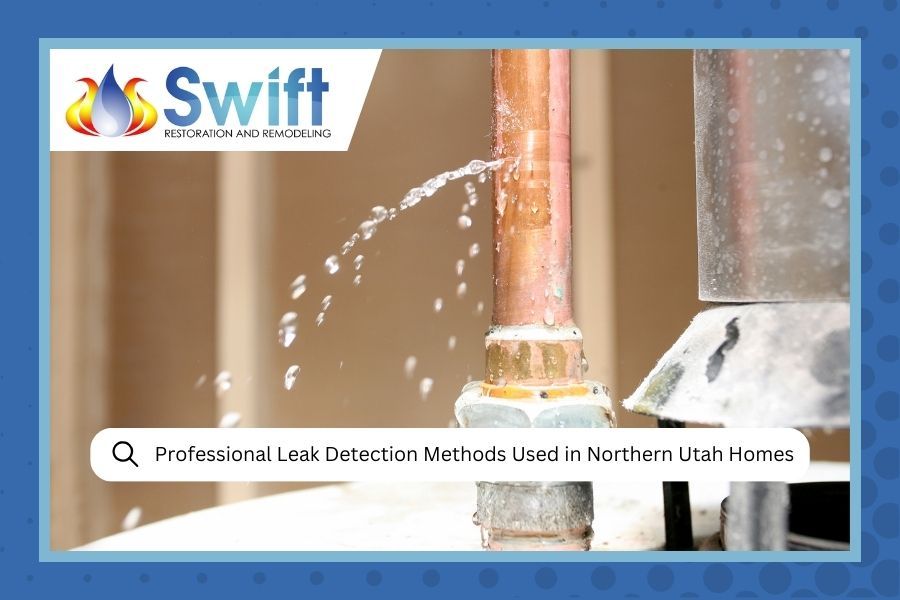
A small water leak doesn't announce itself with fanfare. It hides behind drywall, creeps under flooring, and quietly damages your home for weeks before anything looks wrong. At Swift Restoration and Remodeling, our leak detection services in Ogden use specialized technology to find these hidden problems before they become emergencies. After 15+ years serving Weber County and Northern Utah, we've learned that what you can't see is usually what costs you the most.
Why Leak Detection Matters in Northern Utah
Northern Utah homes deal with freezing winters that stress plumbing joints, spring snowmelt that pushes groundwater against foundations, and clay-heavy soils that shift with moisture. According to the EPA's WaterSense program, the average home with leaks wastes roughly 9,300 gallons of water every year. But water bills are only part of the problem. Undetected leaks lead to mold growth, structural damage, and costly repairs that early detection would have prevented.
Hidden Leak Warning Signs
| Sign | What It Could Mean |
| Unexplained spike in water bill | Hidden pipe leak behind a wall or under the slab |
| Musty smell in certain rooms | Moisture buildup creating mold growth |
| Warm spots on the floor | Hot water line leaking beneath the slab |
| Discoloration on walls or ceilings | Slow leak saturating materials over time |
| Running water sounds when nothing is on | Active leak in the supply line |
Thermal Imaging Cameras
Thermal imaging is one of the most powerful tools we use. These cameras detect temperature differences across surfaces. When moisture sits inside a wall or floor, evaporative cooling creates a temperature variation that shows up clearly on the camera display.
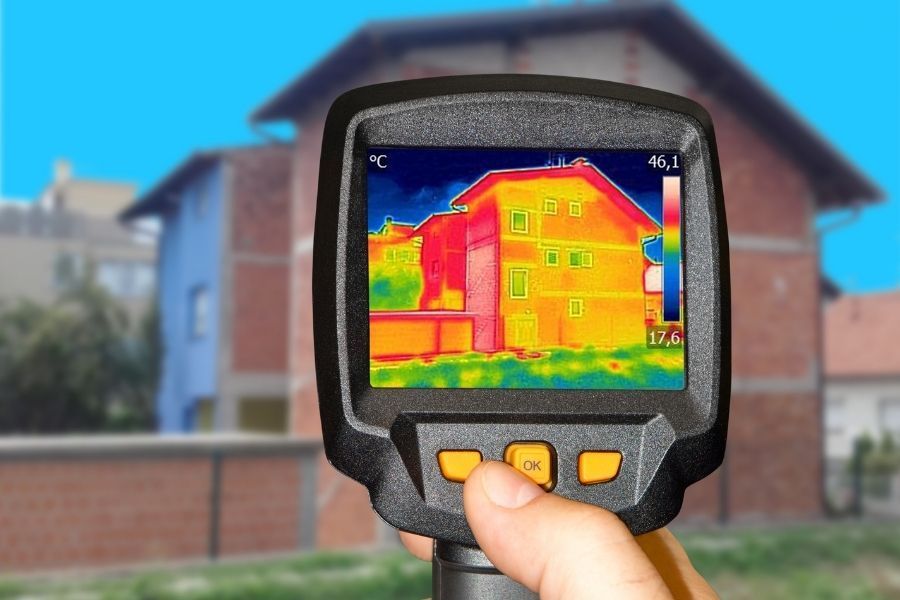
Thermal imaging reveals temperature differences that point to hidden moisture behind walls and under floors.
This lets us scan large areas quickly without cutting into anything. Our IICRC-certified technicians use thermal imaging during water damage restoration assessments across Weber County. It's especially useful in older homes where pipe runs aren't always where the blueprints say they should be.
Think You Might Have a Hidden Leak?
Our team can locate the source quickly and help you avoid bigger problems down the road.
Get a Free EstimateMoisture Meters and Moisture Mapping
If thermal imaging is the wide-angle lens, moisture meters are the magnifying glass. These handheld instruments measure the moisture content of specific materials like drywall, wood, and concrete. Pin-type meters use small probes to measure electrical resistance in the material. Pinless meters use electromagnetic signals to detect moisture below the surface without leaving a mark.
Once we've identified wet zones, we create a moisture map documenting exactly where levels are elevated and how far damage extends. That information is critical for building an accurate restoration plan, and it's essential documentation if you're filing an insurance claim for water damage.
Video Pipe Inspection
Some leaks come from the drain side, where cracked sewer pipes, tree root intrusion, or deteriorating joints allow water to seep into the soil around your foundation. A small, waterproof camera on a flexible cable is fed into the pipe, sending a live video feed to a monitor so we can see cracks, blockages, and root intrusion in real time.
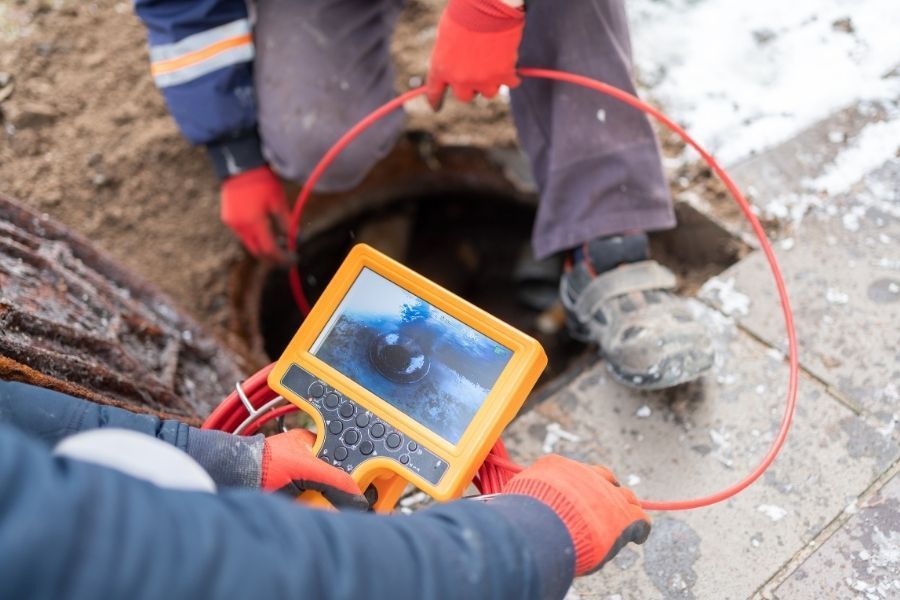
A video camera provides real-time visuals of the interior condition of sewer and drain lines.
This method is particularly valuable during spring in Northern Utah. Saturated soil from snowmelt pushes against aging sewer lines, widening cracks and separating joints. If you've noticed slow drains or wet patches in your yard, video inspection can confirm whether the issue is a damaged pipe rather than a simple clog.
Acoustic Leak Detection
Water escaping a pressurized pipe creates sound, but often it's too subtle for human ears. Acoustic detection equipment amplifies those frequencies using sensitive ground microphones. As the sensor moves across the suspected area, changes in sound intensity help pinpoint the leak's exact location.
This method works best on pressurized supply lines and is especially useful for slab leaks, where a pipe running beneath your home's concrete foundation develops a break. Catching slab leaks early saves thousands in foundation repair and flooded basement cleanup costs.
| Method | Best For | Non-Invasive? |
|---|---|---|
| Thermal Imaging | Hidden moisture in walls, ceilings, floors | Yes |
| Moisture Meters | Precise readings in specific materials | Mostly |
| Video Pipe Inspection | Sewer and drain line damage | Yes |
| Acoustic Detection | Slab leaks and pressurized supply lines | Yes |
When Should You Call a Professional?
Not every drip needs a professional inspection. But if you're experiencing any of the following, it's time to bring in the right equipment:
- Your water bill has increased without explanation
- You smell mold or mildew but can't find the source
- There are warm or damp spots on floors
- Walls or ceilings show staining or peeling paint
- Your water meter moves when all fixtures are off
The sooner you act, the less damage you'll face. A small leak behind a bathroom wall can lead to extensive hidden water damage within just a few weeks. At Swift Restoration and Remodeling, we offer free estimates and serve homeowners across Layton, Ogden, and throughout Weber County.
Don't Wait for a Small Leak to Become a Big Problem
Our team is available 24/7 for emergencies. Call us or schedule a free assessment today.
Contact Our TeamFrequently Asked Questions
How much does professional leak detection cost in Northern Utah?
Costs vary based on complexity and the methods required. At Swift Restoration and Remodeling, we offer free estimates within 24 hours. Many homeowner insurance policies also cover leak detection when it's connected to a covered water damage event.
Can thermal imaging detect leaks behind tile walls?
Yes. Thermal imaging picks up temperature differences caused by moisture, even behind tile and stone. The cooler zone shows up clearly on the display, letting our technicians identify the problem without removing any tile.
How long does a leak detection inspection take?
Most inspections take between one and three hours depending on the size of the home. Simple cases may be resolved in under an hour, while slab leaks or multi-story homes may need more time.
What is the most common cause of hidden leaks in Ogden area homes?
The most common hidden leaks come from aging supply line connections, particularly in homes built between the 1970s and 1990s. Temperature swings from harsh winters stress pipe joints over time, and spring snowmelt can aggravate foundation-level plumbing issues. Regular inspections can catch these problems before they lead to serious water damage from snowmelt and spring runoff.