Emergency Property Protection Methods Used by Ogden Restoration Companies
Updated On: October 27, 2026
Author: Darin Jenks
When disaster hits your home, the first few hours decide how much you'll spend on repairs. emergency property protection isn't about fixing everything right away. It's about stopping damage from spreading. Ogden restoration companies, including our team at Swift Restoration and Remodeling, use specific techniques to secure properties fast after water, fire, or storm damage.
Whether it's a burst pipe in Layton or storm damage in Farmington, these methods are what professionals across Weber County rely on daily.
Why Does Speed Matter After Property Damage?
The clock starts the moment damage happens. Moisture gets into drywall within the first hour. Mold can start growing in 24 to 48 hours, according to the EPA's mold and moisture guide. Every hour of delay adds cost.
That's why restoration companies focus on protection before full repairs begin. Stabilize first, then plan the rebuild.
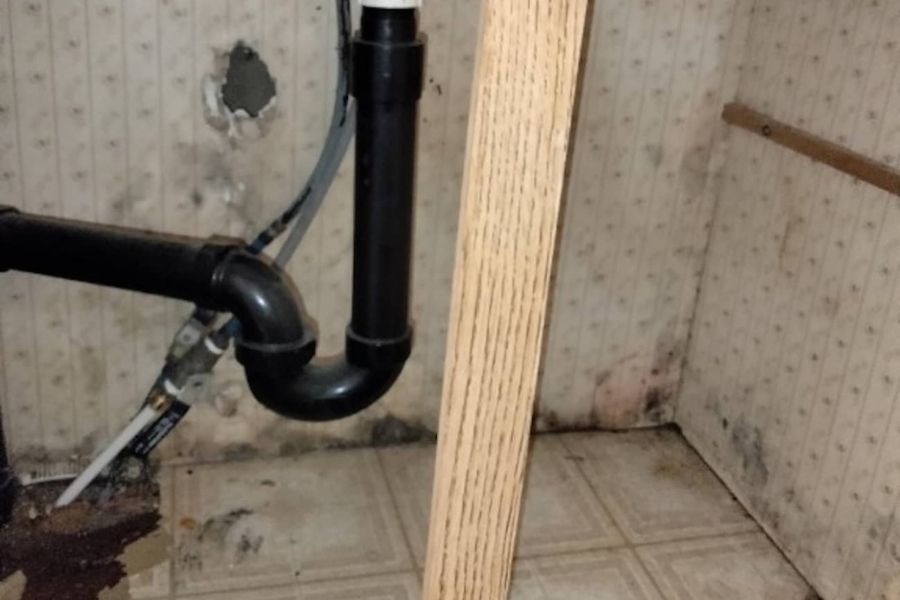
Mold colonies can take hold inside cabinets within days of a slow leak going unnoticed.
How Do Professionals Handle Water Shut-Off?
The fastest way to limit water damage is cutting the supply. But most homeowners don't know where their shut-off valves are when panic sets in.
Restoration teams locate and shut off the main water supply within minutes. They also check fixture shut-offs for toilets, sinks, and water heaters to isolate the source. If water is coming from outside (storm flooding or groundwater), the approach shifts to containment.
Learn your shut-off locations now, before you need them. Our guide on emergency water shut-off locations every Ogden homeowner should know is worth bookmarking.
Dealing With Property Damage Right Now?
Our team at Swift Restoration and Remodeling responds 24/7 to emergencies across Weber County and Davis County. Don't wait for the damage to spread.
Get Emergency Help NowWhat Are Board-Up and Tarping Services?
When damage leaves openings in your home, emergency board-up services are the immediate fix. Crews use plywood, tarps, and industrial fasteners to seal every breach.
Board-up and tarping protects against:
- Weather: Rain, snow, and wind getting in through broken walls or roofing
- Security: Open buildings attract theft and vandalism
- Animals: Pests move into exposed spaces fast
- More damage: Open gaps let moisture weaken the materials around them
In Northern Utah, this matters even more in winter. A missing window in January doesn't just let cold air in. It can freeze pipes, which starts a whole new problem on top of the first one.
Emergency Property Protection Checklist
| Step | Action | Timing |
| 1. Safety First | Turn off electricity and gas if safe to do so | Immediately |
| 2. Stop the Source | Shut off water supply or contain the flow | First 15 min |
| 3. Document | Photograph all visible damage before cleanup | First 30 min |
| 4. Board Up/Tarp | Seal all structural openings against weather | First 2 hours |
| 5. Extract Water | Remove standing water with pumps and extractors | First 4 hours |
| 6. Protect Contents | Move belongings away from damaged areas | First 6 hours |
How Does Emergency Water Extraction Work?
Standing water is the enemy. Every minute it sits, it soaks deeper into subfloors, baseboards, and wall cavities. Professional teams bring truck-mounted extraction units that remove hundreds of gallons per hour.
The process follows this order:
- Remove standing water with high-powered extraction equipment
- Pull up saturated carpet padding (it rarely dries properly)
- Set up air movers and dehumidifiers to start drying
- Monitor moisture levels with meters over the following days
This isn't the same as a shop vac from the hardware store. Professional equipment pulls water from deep within carpet fibers, hardwood, and concrete. For homeowners in Kaysville, Bountiful, and across Davis County, knowing this can save thousands in disaster cleanup costs.
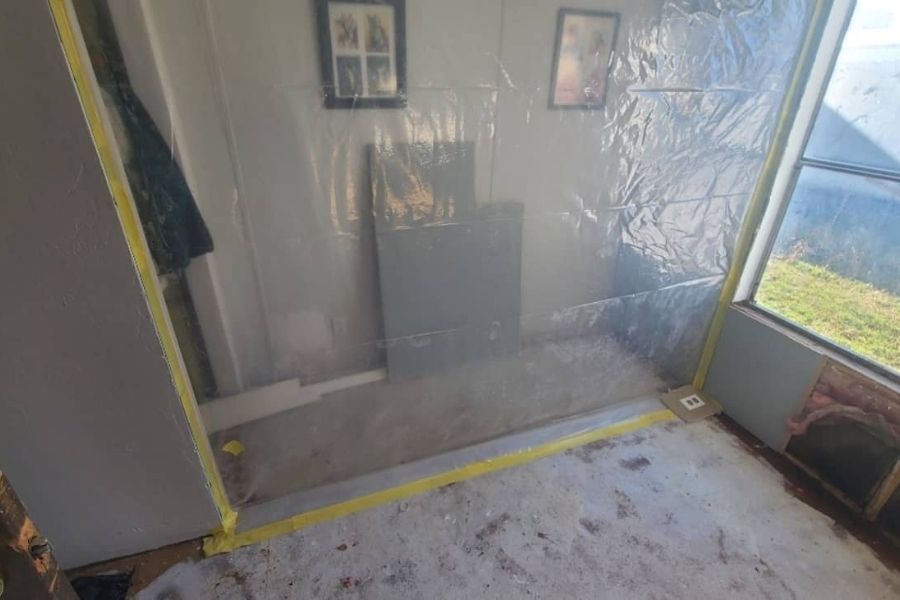
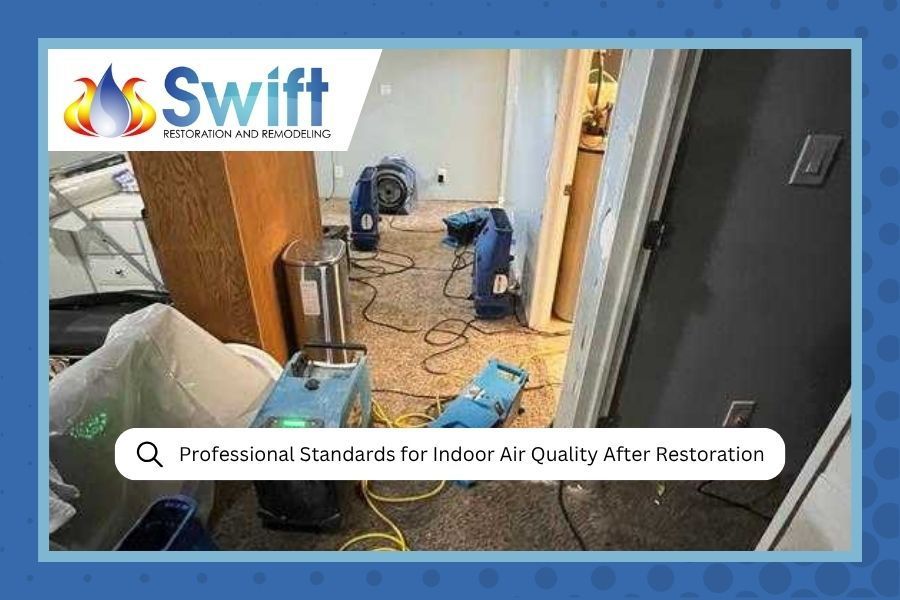
Containment barriers help restoration crews isolate affected areas and control airflow during the drying process.
What Steps Protect Your Belongings During an Emergency?
Your furniture, electronics, and personal items face real risk during any property damage event. Restoration pros use three key techniques:
Elevation: Foam blocks or foil go under furniture legs to lift them off wet floors. This stops stain bleed and moisture wicking.
Relocation: Portable items move to dry rooms or, in severe cases, get packed out to climate-controlled storage.
Covering: Items that can't move get wrapped in plastic sheeting to block dust, debris, and moisture.
Want to be better prepared? Our emergency preparation checklist for Ogden Valley homeowners covers what to do before trouble arrives.
Why Is Damage Documentation So Important?
Insurance claims live and die by documentation. Before cleanup begins, pros photograph and video every affected area. This creates a clear record at the damage's worst point, which is what your adjuster needs.
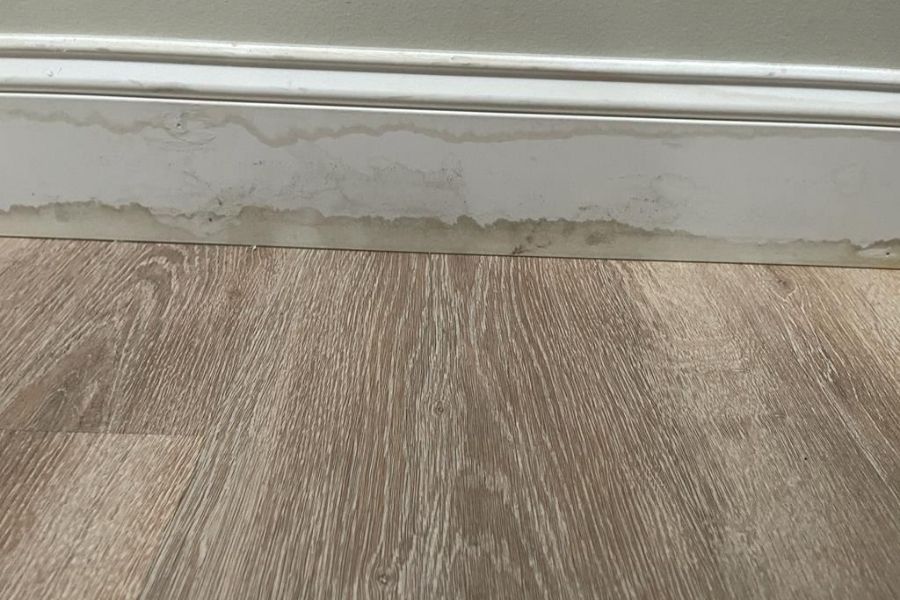
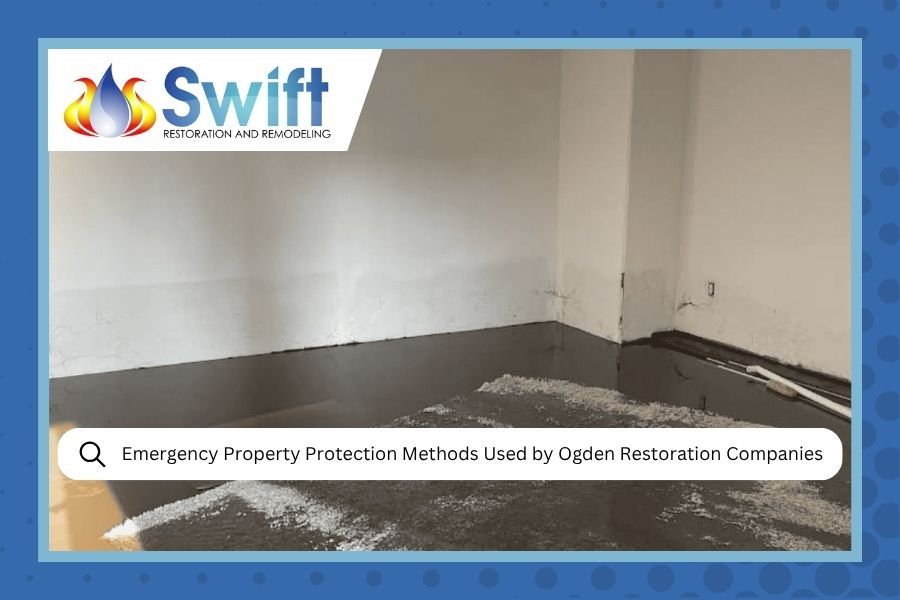
Staining on baseboards like this is exactly the kind of detail that needs to be photographed before any cleanup begins.
FEMA recommends documenting damage before making any repairs. Once you start cleaning, evidence disappears fast.
Take wide room shots, close-ups of damage, and photos of water lines on walls. Your restoration company handles most of this, but your own backup photos help too.
We covered this in detail in our post about how to document water damage for insurance claims in Northern Utah.
When Should You Call a Professional Restoration Company?
As soon as the damage goes beyond a towel and a mop. If water has hit drywall, if you see structural damage, or if there's any fire or contaminated water involved, you need pros.
Our team at Swift Restoration and Remodeling has handled emergency property protection in Ogden and nearby communities for over 15 years. We're IICRC-certified, available 24/7, and we work directly with insurance companies.
The bottom line: emergency property protection buys you time. You can't undo the initial damage, but you can stop it from doubling.
Need Emergency Property Protection in Northern Utah?
Swift Restoration and Remodeling serves Ogden, Layton, Farmington, Kaysville, Bountiful, and all of Weber and Davis Counties. Contact our team for 24/7 emergency response.
Frequently Asked Questions About Emergency Property Protection
How quickly should I call a restoration company after property damage?
Call as soon as you've ensured everyone's safety and shut off utilities if needed. Most restoration companies, including Swift Restoration and Remodeling, offer 24/7 emergency response. The first 2 to 4 hours are critical for limiting secondary damage like mold growth and structural deterioration.
Does my homeowner's insurance cover emergency board-up and tarping?
Most standard homeowner's insurance policies cover emergency board-up and tarping as part of "reasonable steps to prevent further damage." In fact, your policy likely requires you to take protective measures, or you could risk having part of your claim denied for preventable secondary damage.
Can I handle emergency water extraction myself with a shop vac?
A shop vac can handle small spills on hard surfaces, but it can't extract water from deep within carpet padding, subfloors, or wall cavities. Professional truck-mounted extractors remove far more water, far faster. For anything beyond a minor surface spill, professional extraction prevents hidden moisture from causing mold and rot.
What should I move first if my home is flooding?
Prioritize irreplaceable items first: important documents, photos, medications, and electronics. Then focus on high-value furniture and anything sitting directly on wet flooring. Elevate what you can't move by placing aluminum foil or blocks under furniture legs to prevent moisture wicking.