Professional Standards for Indoor Air Quality After Restoration
Updated On: September 28, 2026
Author: Darin Jenks
Jump To:
After any water, fire, or mold event, most homeowners focus on what they can see: torn-out drywall, new flooring, fresh paint. But what you breathe matters just as much as what you look at. Professional standards for indoor air quality after restoration exist to make sure the air inside your home is actually safe once the visible work is done. At Swift Restoration and Remodeling, our IICRC-certified team in Ogden treats air quality verification as a core part of every project, not an afterthought.
Why Does Indoor Air Quality Matter After Restoration?
Restoration work stirs up more than dust. Demolition releases particles from drywall, insulation, old adhesives, and potentially mold spores trapped behind walls. Drying equipment pushes air around constantly, and cleaning agents off-gas into the space for days. If the original damage involved sewage or mold, those biological contaminants become airborne during removal.
The EPA's guide on mold and moisture notes that indoor environments can contain two to five times more pollutants than outdoor air. After a restoration project, that number can spike if proper air quality protocols aren't followed. For families across Weber County, Davis County, and Northern Utah, this is especially relevant during warmer months when homes stay sealed and recirculate indoor air.
Poor post-restoration air quality can trigger respiratory issues, headaches, and allergic reactions. Children and older adults are particularly vulnerable. Learn more about contamination risks in our post on how professional teams handle hazardous materials during restoration.
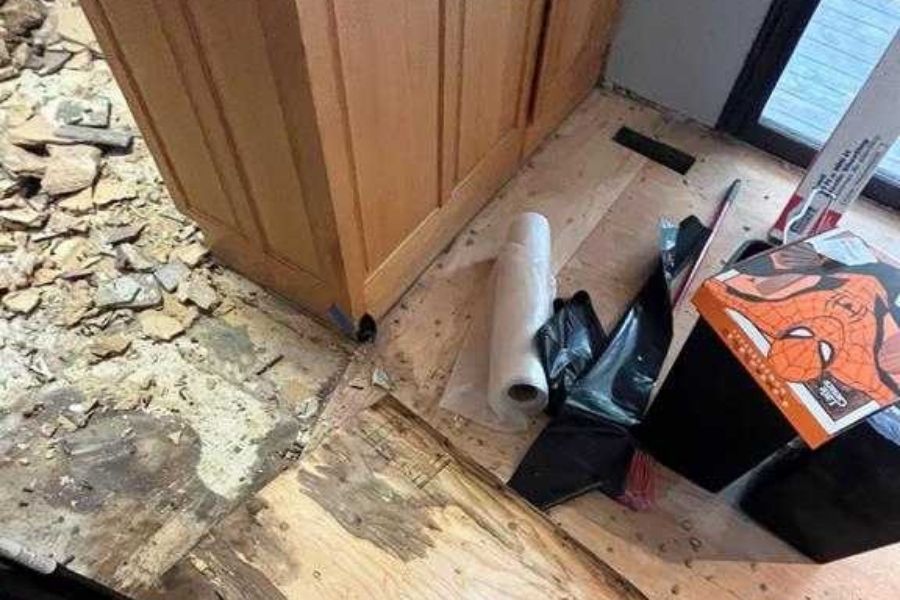
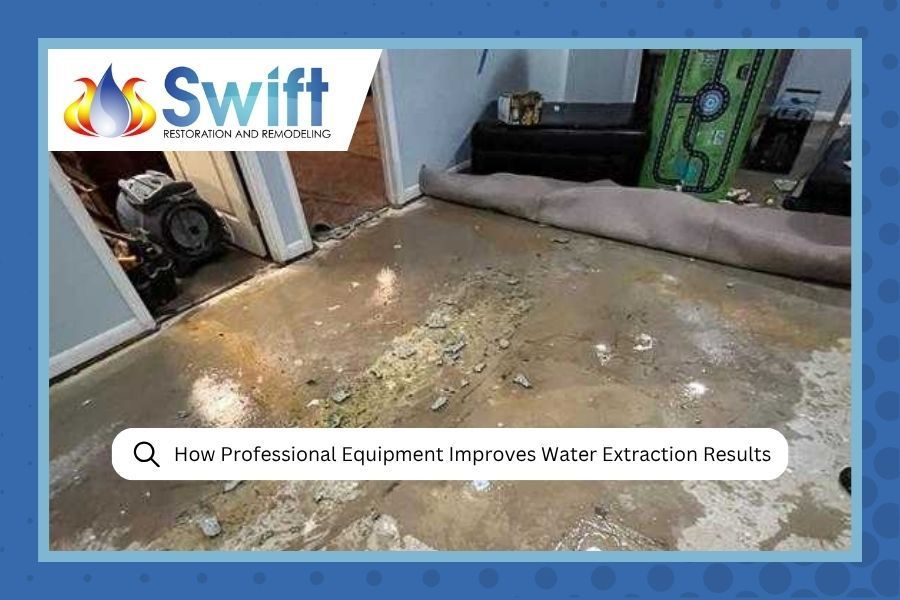
Demolition steps like flooring removal release trapped dust, adhesive particles, and potential mold spores into the air, which is why air quality protocols matter throughout the project.
What Professional Standards Apply to Post-Restoration Air Quality?
Several industry and government standards define what "safe" air looks like after restoration. Reputable restoration companies follow them because they protect both the homeowner and the company's work.
IICRC S520 and S500 Standards
The IICRC S520 standard covers mold remediation and specifically addresses post-remediation verification, including air sampling to confirm spore counts have returned to normal. The S500 standard covers water damage restoration and includes requirements for moisture verification after drying is complete.
EPA Guidelines and OSHA Requirements
The EPA publishes recommended thresholds for pollutants like particulate matter, volatile organic compounds (VOCs), and biological contaminants. Restoration professionals use these as benchmarks when testing post-project air quality. For commercial properties, OSHA's permissible exposure limits also apply during the project itself.
Concerned About Indoor Air Quality After Restoration?
Our IICRC-certified technicians test and verify air quality as part of every restoration project in Northern Utah.
Call (385) 412-8633Key Air Quality Metrics Restoration Professionals Monitor
A thorough post-restoration assessment checks multiple indicators. Here's what professionals measure and why each metric matters.
| Metric | What It Measures | Acceptable Range |
|---|---|---|
| Relative Humidity | Moisture level in the air | 30% to 50% |
| Mold Spore Count | Airborne spores per cubic meter | At or below outdoor baseline |
| VOCs | Chemical off-gassing from materials | Below 500 ppb total |
| Particulate Matter (PM2.5) | Fine dust and debris particles | Below 35 µg/m³ |
| Material Moisture | Residual water in wood, drywall | Below 15% wood, below 1% drywall |
High humidity after a water damage project can signal that drying wasn't completed properly, creating a perfect environment for mold. Our post on the mold growth timeline after water damage in Utah's climate explains how quickly that process starts.
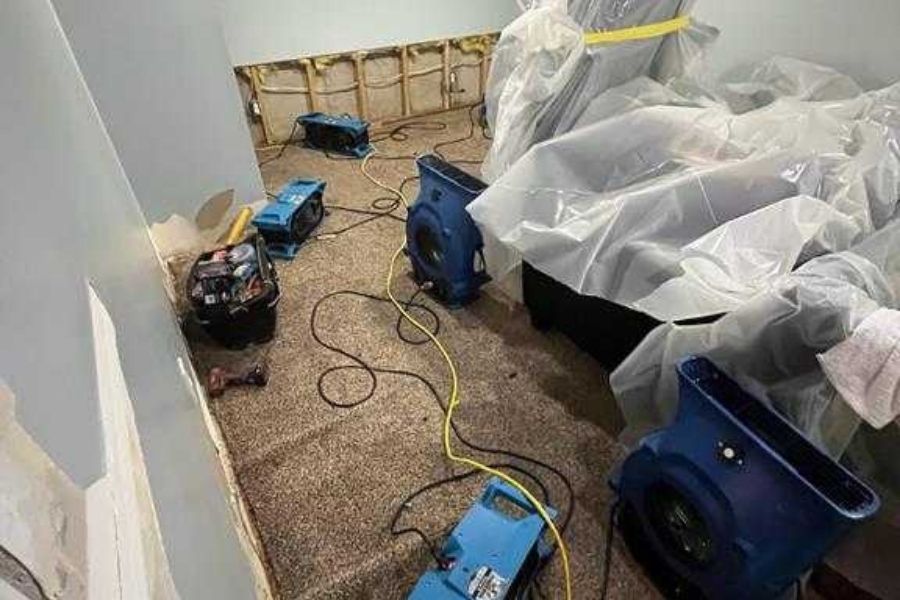
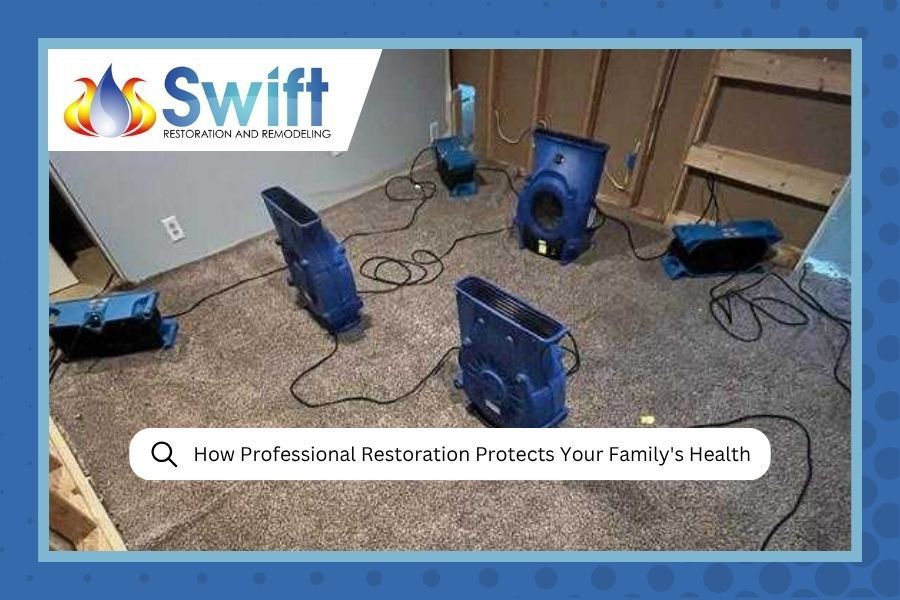
Professional-grade drying equipment maintains controlled humidity levels while air movers circulate filtered air, both of which directly impact post-restoration air quality readings.
How Do Restoration Teams Achieve Safe Indoor Air Quality?
Reaching safe air quality isn't one single action. It's a sequence of steps that professional teams build into the project from day one.
Containment and HEPA Filtration
Before tearing out damaged materials, technicians set up containment barriers with plastic sheeting and negative air pressure. This prevents dust, spores, and debris from spreading to unaffected areas. Industrial HEPA air scrubbers run continuously, filtering particles down to 0.3 microns. A standard household air purifier can't match this level of filtration.
Controlled Drying and Dehumidification
Professional-grade dehumidifiers and air movers maintain specific humidity levels that prevent secondary damage. Technicians monitor moisture readings daily, adjusting equipment placement until all materials hit target moisture content.
Post-Project Verification
Before clearing a project, restoration companies verify these conditions:
- All affected materials register moisture levels within acceptable ranges
- Relative humidity holds steady between 30% and 50% for at least 24 hours
- Air sampling confirms mold spore counts match or fall below outdoor levels
- VOC levels from sealants and paints are below recommended thresholds
- HVAC filters have been replaced to prevent recirculation of contaminants
At Swift Restoration and Remodeling, this checklist is standard on every project across Ogden, Layton, Farmington, Kaysville, and Bountiful. With 15+ years of restoration experience, we've learned that cutting corners on verification always costs more later.
When Should You Test Indoor Air Quality After Restoration?
Testing should happen at two points: immediately after work is completed and again 48 to 72 hours later. The first test confirms active contamination has been addressed. The second verifies conditions have remained stable, which is especially important after mold remediation or large-scale water damage projects.
If you had professional mold testing done before the project, the post-restoration test should be conducted by the same third-party inspector for consistency.
Did You Know?
Mold can begin growing within 24 to 48 hours of water exposure. That's why post-restoration air testing includes spore counts, not just moisture readings. Even if everything looks dry, airborne spores can indicate hidden problems that need attention.
If testing reveals elevated readings, it usually means additional drying, filtration, or targeted cleaning is needed. A reputable company won't push back on retesting. They want clean results as much as you do. You can also read about preventing mold during Utah's humid summer months for year-round air quality tips.
Need Indoor Air Quality Verification After Restoration?
Swift Restoration and Remodeling includes air quality testing on every restoration project in Northern Utah. Whether you're recovering from water damage, fire damage, or mold, we make sure the air in your home is safe before we call the job done. See all our service areas.
Contact Our Team TodayFrequently Asked Questions
How long does it take for indoor air quality to return to normal after restoration?
After water damage restoration, air quality typically stabilizes within 48 to 72 hours once drying is complete. Mold remediation projects may take longer because spore counts need to be verified against outdoor baselines. VOCs from new materials can linger for a few days to a couple of weeks depending on ventilation.
Can I test my home's air quality myself after restoration work?
Consumer-grade monitors can measure basics like humidity, but they aren't accurate enough for post-remediation verification. Professional air sampling with lab analysis is the standard for confirming mold spore counts and VOC levels. A third-party industrial hygienist provides the most reliable results.
What happens if my restoration company skips air quality testing?
Without post-restoration verification, you have no proof the work was completed properly. Hidden moisture or elevated spore counts could cause secondary damage and health issues down the road. If your company doesn't include testing, that's a red flag worth addressing before signing off on the project.
Does homeowners insurance cover post-restoration air quality testing in Utah?
Most homeowners insurance policies in Utah cover testing costs when they're part of a covered restoration claim. Air quality testing tied to mold remediation or water damage cleanup is typically included in the project scope. Your restoration company can help document the testing as a necessary expense.