How to Protect Undamaged Areas During Restoration Work
Updated On: November 24, 2026
Author: Darin Jenks
The best way to protect undamaged areas during restoration work is to seal off the job before anyone tears anything out. That means plastic barriers, controlled airflow, covered floors, and a clear path in and out. At Swift Restoration and Remodeling, our IICRC certified crews set this up on every water damage restoration job we run across Weber and Davis County.
Here's the part nobody warns you about. One bathroom leak can turn into dust in five bedrooms if the cleanup is sloppy. Let's walk through how good containment works and how you can help.
Why Do Clean Rooms Get Damaged During Restoration?
Clean rooms get damaged when dust, moisture, or contaminants escape the work area. Demolition kicks fine particles into the air, drying equipment moves that air around, and crews walk in and out all day. Without barriers, your vents and hallways carry the mess into rooms that were fine yesterday.
The Usual Suspects
- Construction dust. Cutting drywall and pulling flooring release fine particles that settle everywhere, even in closets nobody opened.
- Mold spores and soot. Once disturbed, both ride air currents into other rooms.
- Moisture migration. Wet materials release water vapor that drifts next door if the area isn't isolated.
- Foot traffic and equipment. Boots, hoses, and heavy dehumidifiers can scuff hardwood, snag carpet, and gouge door frames.
Northern Utah adds its own twist. A winter pipe burst in Ogden often means crews tracking snow, slush, and road salt through your entryway several times a day. Spring brings mud. Either way, your floors need a plan.
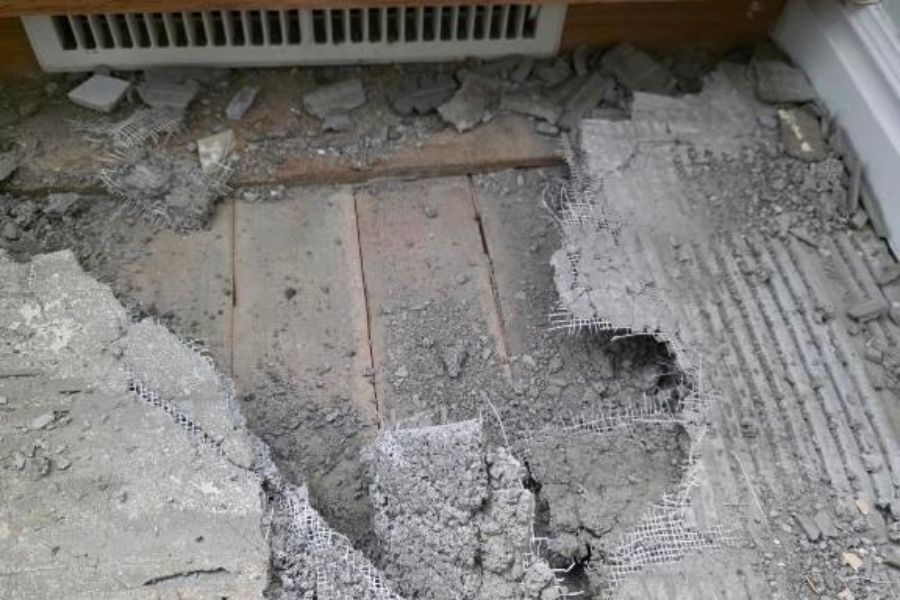
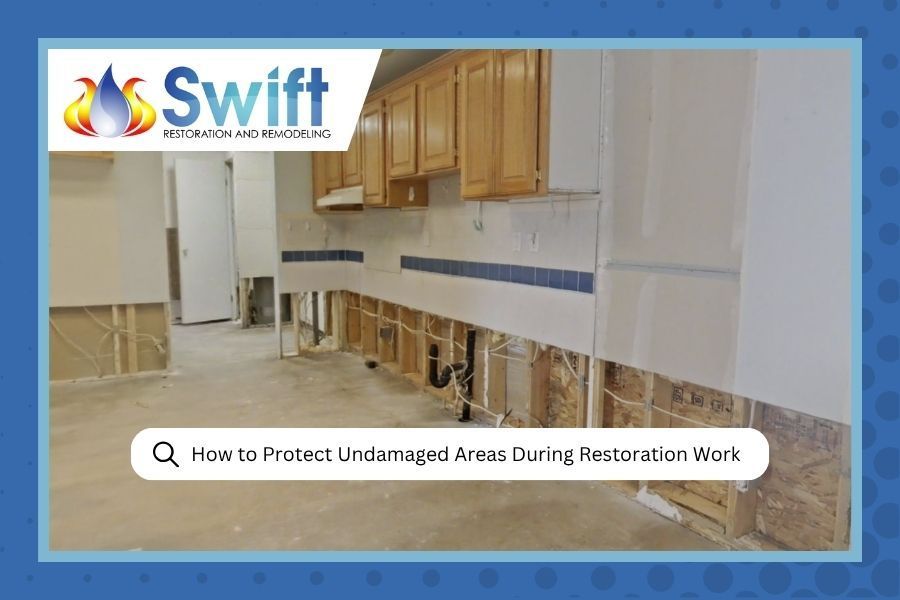
Pulling up damaged flooring leaves dust and debris behind, and without containment it doesn't stay put.
How Do Restoration Crews Contain the Work Zone?
Restoration crews contain the work zone by physically sealing it and controlling which way the air flows. Plastic sheeting walls off the damaged area, HEPA filtered air scrubbers clean the air inside, and vents get covered so nothing rides the ductwork into other rooms. Together, these steps keep the problem where it started.
Containment Barriers
We build temporary walls from thick plastic sheeting with a zipper door for access. For a bathroom leak, that might be one doorway. For a flooded basement, it could be the whole stairwell.
These setups follow the containment practices in the IICRC restoration standards, which certified technicians train on. It's not improvised. It's the playbook.
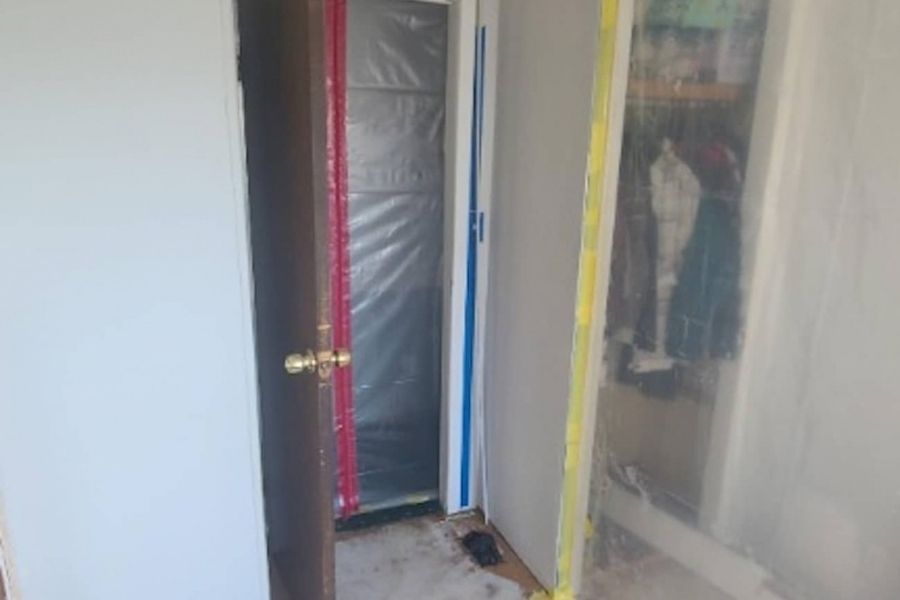
A zipper door barrier keeps dust and moisture on the work side while you use the rest of your home.
Negative Air Pressure
This sounds technical, but it's simple. An air scrubber pulls air out of the sealed space through a HEPA filter. Since more air leaves than enters, any gaps pull air in, not out. Dust can't swim upstream.
Sealing Vents and Returns
Your furnace return is basically a vacuum for the whole house. We cover vents inside the work area and may ask you to shut the system off during heavy demolition. Fewer surprises in the guest room.
| Risk | Where It Spreads | How We Stop It |
|---|---|---|
| Drywall and demolition dust | Hallways, return vents, nearby rooms | Plastic barriers, sealed vents, HEPA air scrubbers |
| Mold spores | Air currents, clothing, tools | Negative air pressure, sealed containment, bagged debris |
| Smoke and soot residue | Ductwork, upholstery, closets | Vent covers, contents pack out, HEPA filtration |
| Moisture and humidity | Shared walls, subfloors, cabinets | Isolated drying zones, daily moisture readings |
| Foot traffic and equipment | Entryways, stairs, hardwood | Floor protection boards, door jamb guards, set work paths |
What Can You Do Before the Crew Arrives?
You can protect your home before work starts by clearing paths, moving small valuables, and telling the crew about anything fragile. A few minutes of prep makes containment faster and lowers the odds of a chipped heirloom. Leave the heavy lifting and anything in the wet or contaminated area to the professionals, though.
Room by Room Protection Checklist
Hallways and Entryways
- Clear rugs, shoes, and decor from the path between the door and the work area.
- Take breakable items off walls the crew will brush past with equipment.
- Point out any floors you're especially protective of.
Bedrooms and Living Areas Near the Damage
- Close doors to rooms that won't be worked on.
- Box up jewelry, medications, and important papers.
- Unplug and put away laptops and small electronics.
Kitchen and Bathrooms
- Store dishes and food in closed cabinets or sealed containers.
- Clear open shelving and countertops.
- Keep toothbrushes and toiletries tucked away.
The Damaged Area Itself
- Take photos for your insurance claim before anything moves.
- Don't drag wet or moldy items through the house yourself.
- Let the team handle removal, bagging, and disposal.
One more thing. Zipper doors are irresistible to toddlers and nosy dogs, so plan a spot for them away from the action. If you're unsure whether your family should stay put, our guide to coordinating temporary housing during major restoration walks through the options.
Do Older Homes Need Extra Protection?
Older homes often need extra protection because the surfaces being disturbed may contain lead paint. If your house was built before 1978, lead based paint could be hiding under newer coats. Cutting through those layers creates hazardous dust, so the rules get stricter.
The EPA Renovation, Repair and Painting Program requires certified firms to follow lead safe work practices, including containment and specialized cleanup, when disturbing paint in those homes. Sewage soaked materials and heavy mold growth call for the same caution, which we cover in our post on handling hazardous materials during restoration.
Once hazards are cleared and the space is dry, our home reconstruction services pick up where cleanup leaves off. One crew and one containment plan through the rebuild means fewer chances for dust to escape.
How Do You Know Clean Areas Stayed Clean?
You know clean areas stayed clean when the final walkthrough checks them, not just the repaired room. A good crew wipes surfaces outside the barrier, checks floors along the work path, and confirms the air is good before the plastic comes down. If something got missed, you should hear it from them first.
Before we pull containment, we HEPA vacuum and wipe the work zone, then look over the hallways and rooms beside it. On mold and fire jobs, air quality matters as much as clean surfaces. Our breakdown of indoor air quality standards after restoration explains what that looks like.
Walk the house yourself, too. Open nearby closets. Run a finger across a shelf. We'd rather fix a dusty baseboard today than hear about it next month.
That goes for every home we work in, from Ogden and Roy to Kaysville and families searching for Layton water damage restoration. The damage should stay where it started.
Frequently Asked Questions About Protecting Your Home During Restoration
Can I stay home while containment is set up?
In many cases, yes. Containment is designed so you can keep using the unaffected parts of your house while work continues. Big mold or sewage jobs can make a short stay elsewhere the smarter call.
Will plastic sheeting or tape damage my walls and floors?
It shouldn't. We use tapes and floor coverings made for finished surfaces and remove them carefully when the job wraps up. Tell us about fresh paint or delicate flooring so we can adjust.
Should I move furniture out of rooms next to the damage?
Small, valuable, or fragile items are fine to move yourself. Leave heavy furniture and anything wet or moldy to the crew, since moving it can spread contamination or hurt your back.
Does insurance pay for containment and protection?
Containment is often included in the mitigation portion of a covered water or fire claim, since it limits further damage. Coverage depends on your policy, so confirm with your insurer. We work directly with insurance companies and can help explain the process.