Understanding Structural Drying Timelines for Different Materials
Updated On: November 17, 2026
Author: Darin Jenks
Structural drying usually takes three to five days for a typical water loss, but the honest answer depends on what got wet. Drywall and carpet can dry in a couple of days, while hardwood, plaster, and concrete can stretch things into weeks. Our IICRC certified team at Swift Restoration and Remodeling handles structural drying across Weber County and Davis County, and knowing your materials is the best way to predict your timeline.
So if you're staring at a room full of humming fans and wondering when life gets back to normal, this one's for you.
How Long Does Structural Drying Take?
Most homes reach their drying goals in three to five days once professional equipment is running. That range assumes the leak is fixed, standing water is pulled out quickly, and the wet materials release moisture easily. Dense materials, cold basements, and delays before drying starts can all push the timeline longer.
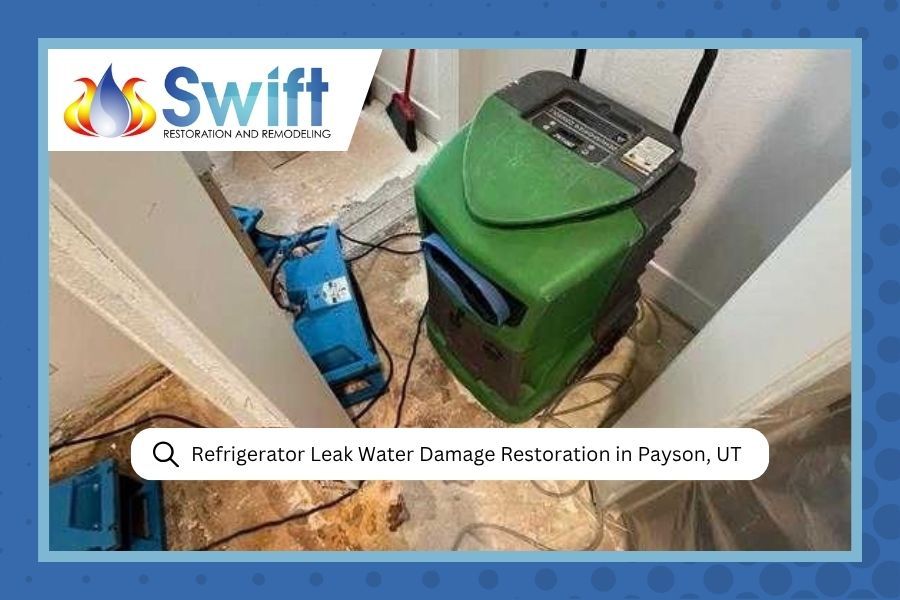
Structural drying is the stage where we pull moisture out of the building itself. That means walls, floors, framing, and everything hiding behind them. It's different from mopping up the puddle you can see.
Here's the tricky part. A wall can feel completely dry to your hand and still hold enough moisture inside to feed mold. Your fingertips are great at a lot of things, but measuring moisture content isn't one of them.
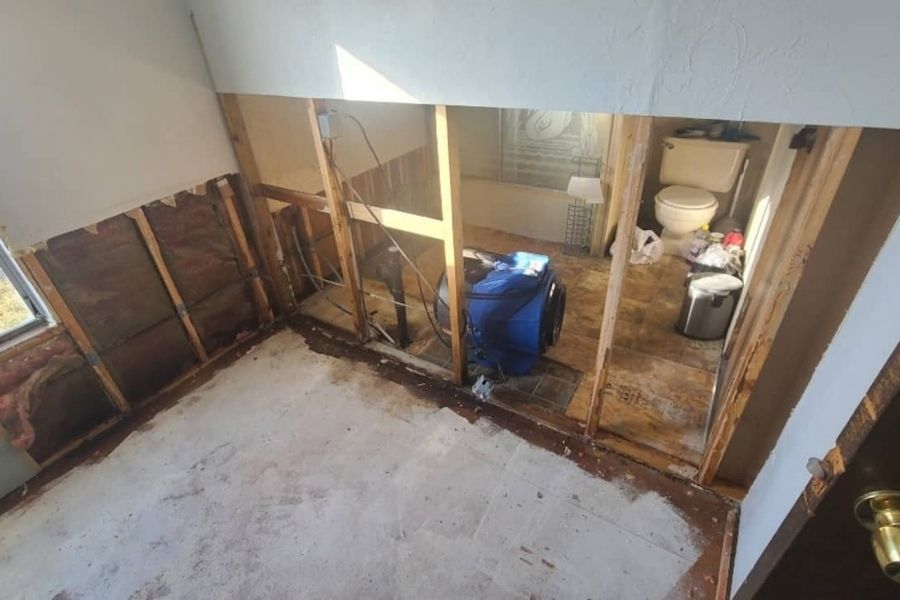
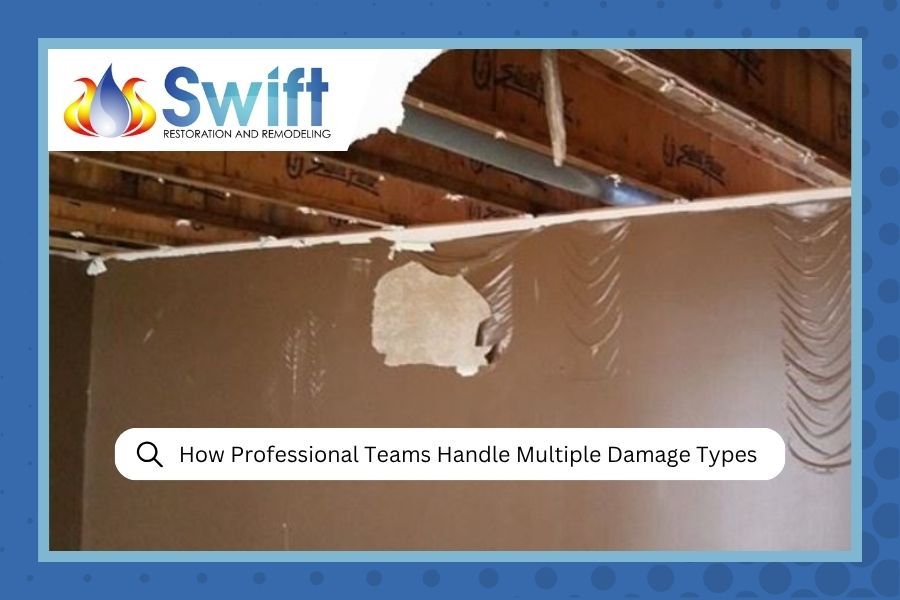
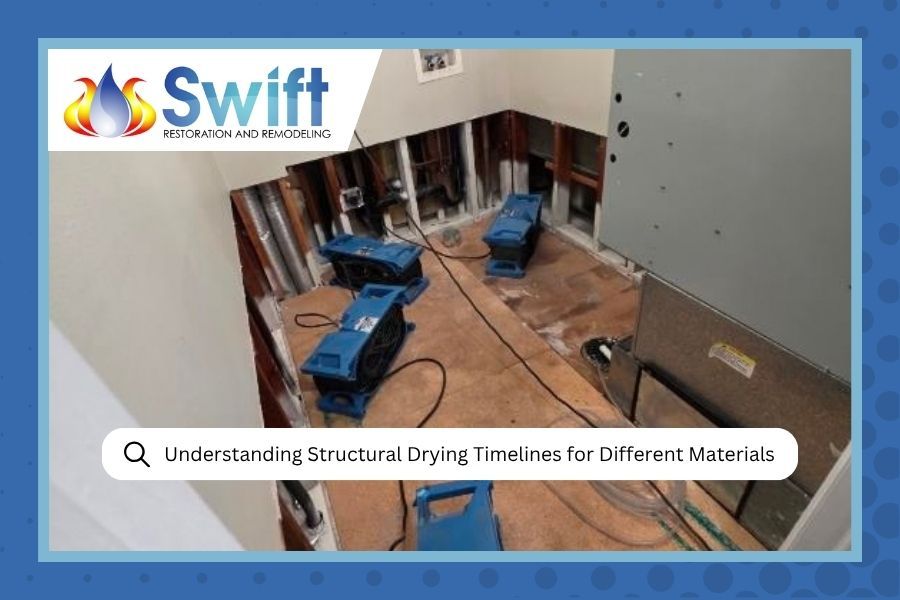
Once wet drywall comes out, dry air can finally reach the framing and wall cavities hiding behind it.
What Are the Drying Timelines for Different Materials?
Every building material dries at its own pace because of how dense it is and how tightly it holds water. Thin, porous materials like drywall release moisture fast. Dense or layered materials like hardwood, plaster, and concrete give it up slowly. The table below shows the general ranges we see once drying equipment is set up and running.
| Material | Typical Drying Time | Good to Know |
|---|---|---|
| Carpet | 1 to 3 days | The pad underneath is often replaced, especially after contaminated water |
| Drywall | 2 to 4 days | Badly saturated sections are usually cut out instead of dried |
| Wood framing | 3 to 7 days | Opening wall cavities speeds things up |
| Plywood and OSB subfloor | 3 to 7 days | OSB can swell and may need replacing |
| Hardwood flooring | 1 to 3 weeks | Specialty drying mats pull moisture from the boards |
| Plaster walls | 1 to 3 weeks | Dense and slow, common in older homes |
| Concrete slab or block | 1 to 4 weeks or more | Releases water slowly and needs steady conditions |
Fast Drying: Carpet and Drywall
These two are the sprinters. Drywall is basically pressed gypsum wrapped in paper, so moisture moves through it easily. Carpet fibers dry quickly too, though the pad is a different story and often gets swapped out.
Middle of the Pack: Framing and Subfloors
Studs, joists, and subfloors are solid wood, so water soaks deeper and takes longer to leave. We often pull baseboards or drill small holes to get air into the wall cavities.
Slow Drying: Hardwood, Plaster, and Concrete
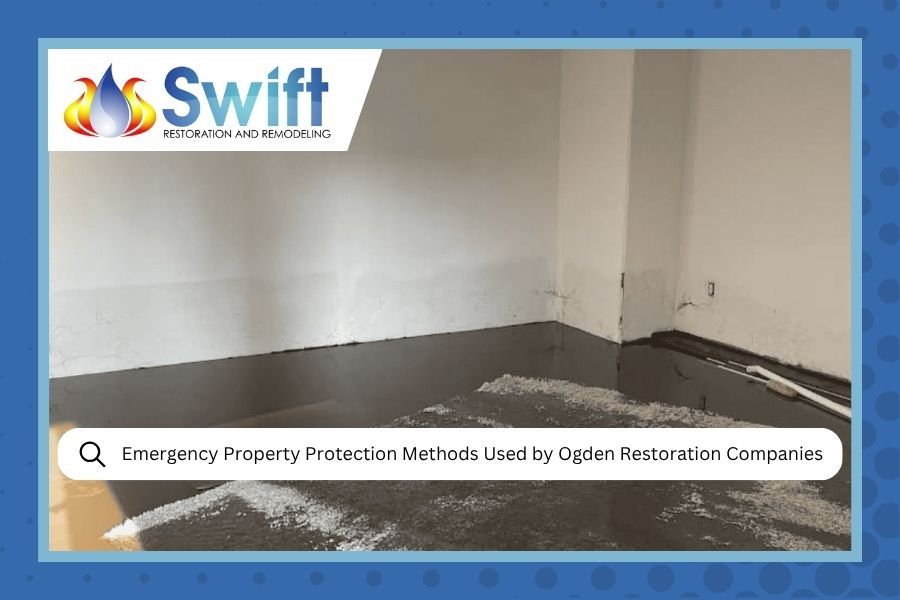
This group tests everyone's patience. These materials hold water deep inside and only let it go a little at a time. A basement slab after a spring runoff flood is a classic example of a slow, steady drying job.
Why Do Some Materials Take So Much Longer to Dry?
Dense materials hold water deep inside and can only release it slowly from the surface. The IICRC water damage standards give these situations their own category, Class 4, often called specialty drying. Hardwood, plaster, and concrete fall here, and they need more time and more targeted equipment to dry safely.
You might think cranking every fan to max would solve it. With hardwood, drying too aggressively can cause cracking and other damage. Sometimes the smartest move is a slower, controlled approach that protects the material you're trying to save.
Utah's dry air helps once things get moving. Our basements are another story. Below grade spaces stay cool, and colder air slows evaporation, which is why a winter basement loss in Ogden or Ogden Valley can take longer than a summer one upstairs.
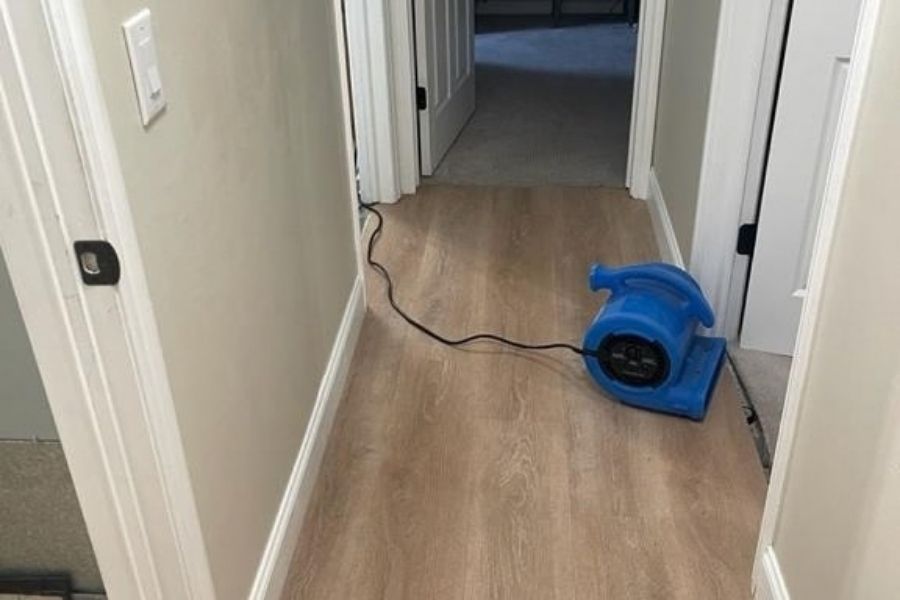
Floors are often the slowest part of a drying job, since moisture can hide in the boards and the subfloor underneath.
What Speeds Up or Slows Down Drying in Northern Utah Homes?
How fast drying starts matters almost as much as what got wet. The EPA guide to mold and moisture recommends drying wet materials within 24 to 48 hours to help prevent mold growth. After that first window, airflow, temperature, humidity, and access to hidden spaces decide how quickly things wrap up.
Speeds it up: Fast extraction
Speeds it up: Open wall cavities
Slows it down: Cold temperatures
Slows it down: Waiting to start
Your Drying Week Checklist
- Leave the air movers and dehumidifiers running around the clock. Yes, even overnight. We know the hum gets old.
- Keep windows and doors closed unless our technician says otherwise.
- Don't shut off the heat during cold months.
- Stay off wet hardwood as much as you can, and don't put rugs over damp floors.
- Let us know right away if you notice musty smells or new stains.
If drying stalls, mold can move in faster than most people expect. You can read more about how fast mold grows in Utah's climate, and if it's already showing up, our mold removal in Ogden team can handle it safely.
How Do Professionals Know When Everything Is Actually Dry?
We confirm dryness with moisture readings, not by touch or by counting days. Our technicians check each wet material with moisture meters and compare it to a dry standard, which is a reading from the same material in an unaffected part of your home. Drying is finished when the wet areas match that baseline.
We take readings every day and adjust equipment based on what the numbers show. Those daily logs also give your insurance adjuster clear documentation of the drying process. Curious about the tools? Here's how professional equipment improves results on water jobs.
Want to see where drying fits in the bigger picture? Check out our full water damage restoration timeline in Weber County. Once readings hit the dry standard, any removed drywall, flooring, or trim gets rebuilt.
Need Help Drying Out Your Home?
The fastest way to a shorter drying timeline is getting professionals on site early. Whether you're dealing with a burst pipe, a basement flood, or an appliance leak, we'll identify which materials are wet, set up the right equipment, and track every reading until your home is truly dry and ready for repairs.
Our team serves homeowners throughout Ogden, Roy, Kaysville, Farmington, Bountiful, and Brigham City, plus families needing water damage restoration in Layton. Emergency water response is available 24/7 within our service area.
Frequently Asked Questions About Structural Drying
These are the questions homeowners ask us most often while the drying equipment is running. If yours isn't covered, ask your technician during a daily visit. They'll walk you through your readings.
Can I turn off the drying equipment at night?
Please don't. Air movers and dehumidifiers work as a continuous system, and shutting them off lets humidity climb right back up. Every pause adds time to the job.
Why are my hardwood floors cupping during drying?
Cupping happens when the bottom of the boards holds more moisture than the top. As drying evens things out, many floors flatten back down. We monitor the boards before deciding whether anything needs replacing.
Does homeowners insurance cover structural drying?
Many policies cover drying when the water damage is sudden and accidental, like a burst pipe. Coverage depends on your specific policy, so check with your insurance provider. We work directly with insurance companies to help the claim go smoothly.
Can I repaint or patch drywall as soon as it feels dry?
It's better to wait for moisture readings to confirm the wall is dry. Painting over damp drywall can trap moisture inside, leading to peeling paint and possible mold growth.